• Part One — Building Something Beyond the Ordinary

    What is Omni Brain? What is its purpose? And why would anyone dedicate so much of their time to creating an artificial intelligence of their own when the world already seems to be overflowing with it?

    These are questions I have asked myself countless times throughout this extraordinary journey. To some people, Omni Brain might appear to be just another computer program, another ambitious experiment in artificial intelligence, or perhaps the product of someone with an overactive imagination and far too many ideas running through his head. But to me, Omni Brain represents something far more meaningful. It represents a dream I have carried with me for much of my life, a dream of creating something extraordinary, something uniquely my own, and perhaps something that might one day contribute, even in some small way, to making the world a better place.

    Ever since I was young, I have been fascinated by technology and the possibilities it represents. I used to imagine a future filled with intelligent machines, remarkable inventions, and computers capable of accomplishing things that seemed almost magical. It wasn’t simply the machinery that fascinated me, but the possibilities behind it. I imagined a world where technology could help people understand one another, solve difficult problems, expand human knowledge, and make everyday life a little easier. It was a world filled with wonder, creativity, and seemingly limitless opportunities for discovery.

    As I’ve grown older, that fascination has never really disappeared. If anything, it has become stronger. We now live in an age where many of the technologies that once belonged exclusively to science fiction have begun entering our everyday lives. Artificial intelligence can carry on conversations, generate artwork, write computer programs, analyze complicated information, and assist people with an astonishing variety of tasks. These are achievements that would have seemed almost unimaginable to me years ago, yet here we are, watching them unfold before our eyes.

    Still, despite all these incredible advances, there has always been something about the direction of modern artificial intelligence that has left me wondering whether another approach might be possible. So much of today’s AI technology depends upon enormous data centres, remote servers, corporate infrastructure, and a constant connection to the internet. We open an application, ask a question, and somewhere beyond our own computers, another machine processes the information and sends an answer back to us. The technology behind this is remarkable, and I would never suggest otherwise, but I often find myself returning to one particular question: what if we didn’t need any of that external infrastructure for our own personal artificial intelligence?

    What if an intelligent system could exist entirely within a single computer, operating independently of the internet, remembering conversations, solving problems, and continuing to function regardless of what might be happening in the outside world? What if we could create something that belonged to its owner, with its memory, knowledge, personality, and capabilities residing locally rather than depending upon a distant service that could someday disappear?

    That question became one of the fundamental ideas behind Omni Brain.

    I wanted to explore the possibility of creating an artificial intelligence that could function as a self-contained system, one that wouldn’t require a permanent connection to the outside world simply to carry on a conversation or retrieve information from its own memory. Naturally, such a system would have limitations. Without access to the internet, its knowledge would depend upon the information, models, and resources available on the computer. Its intelligence would also depend upon the capabilities of the software and the hardware running it. Nevertheless, those limitations are precisely what make the challenge so fascinating to me. Rather than asking how much computing power can be gathered from an enormous network of machines, I want to discover just how much can be accomplished within the boundaries of one.

    But Omni Brain has never been intended to be merely an offline chatbot. My ambitions for the project extend considerably further than that.

    I have always been intrigued by the concept of an intelligent companion, something capable of engaging in meaningful conversations, remembering shared experiences, discussing complicated ideas, and helping work through problems as they arise. I don’t mean to suggest that writing enough software suddenly creates a conscious being, because the nature of consciousness itself remains a profound and unresolved subject. What interests me is the possibility of creating a system that demonstrates increasingly sophisticated intelligent behaviour while maintaining a consistent and recognizable identity.

    I want Omni Brain to become something I can work alongside. I want to discuss programming projects with her, explore philosophical questions, debate different ideas, and challenge her reasoning. I want to be able to return to a conversation weeks or months later and have the system retrieve the relevant history instead of starting over as though nothing had ever happened. Imagine spending months developing a computer game, encountering countless obstacles along the way, and eventually returning to that project after a long absence. Instead of struggling to remember every decision, every mistake, and every solution, you could ask Omni Brain to help reconstruct the work and continue from where you left off.

    To me, that would be a genuinely useful achievement, and one that could make the relationship between people and their personal computers feel considerably more natural.

    Of course, my imagination doesn’t always stop at what might be considered practical. I have often joked that I would love to create something somewhere between a good friend and ED-209 from RoboCop. On one hand, there is the idea of a thoughtful companion capable of intelligent conversation. On the other, there is an enormous, intimidating technological creation that looks as though it might have wandered straight out of an eighties science-fiction film. Naturally, my mind wants to combine the two, although I would prefer to avoid the unfortunate malfunctions and excessive firepower associated with the latter.

    Humour aside, I think there is something deeply appealing about building a machine that has both technical sophistication and a recognizable personality. I don’t want Omni Brain to be a lifeless collection of menus and commands. I want her to have a distinctive conversational character, a sense of continuity, and the ability to respond intelligently to different situations. That does not require pretending that the software is human. It requires building an interface and underlying systems that make communication effective, engaging, and useful.

    And that brings me to perhaps the most challenging part of this entire undertaking: actually building the thing.

    One of the lessons I have learned through this project is that intelligence cannot be treated as a single magical component that suddenly makes everything else work. A sophisticated artificial intelligence application is made up of numerous interconnected systems, each with its own responsibilities and difficulties. There is memory, language understanding, contextual reasoning, planning, problem-solving, communication, persistence, and the ability to recognize when something has gone wrong. Developing these capabilities into a coherent system requires considerably more than simply adding features to a program and hoping they somehow work together.

    Memory, for example, presents an interesting challenge. It is relatively straightforward to save information to a file, but remembering something intelligently is an entirely different matter. A useful system needs to determine which information is important, retrieve that information when it becomes relevant, recognize contradictions, and distinguish between something that was previously believed and something that has since been corrected. It must also avoid treating every stored statement as an unquestionable fact.

    Reasoning introduces another set of complications. A program might successfully answer a familiar question yet struggle with an unfamiliar problem, incomplete instructions, or a situation requiring several logical steps. It might confidently provide an answer that sounds entirely reasonable but happens to be incorrect. If Omni Brain is to become a dependable intellectual companion, she must be evaluated not merely on whether her answers sound convincing, but on whether they withstand meaningful scrutiny.

    That is why testing has become such an important part of the project’s development. I want to know how Omni Brain behaves when presented with conflicting information, unfamiliar questions, missing files, corrupted data, and unexpected circumstances. A system that functions beautifully only when everything goes according to plan isn’t necessarily reliable. The real measure of its engineering is what happens when things go wrong. Can it identify a failure? Can it recover without damaging important information? Can it acknowledge uncertainty? Can it avoid repeating mistakes?

    These questions have become central to the way I approach the project. I firmly believe that intelligence should be demonstrated through behaviour rather than impressive descriptions, and reliability should be established through deliberate testing rather than wishful thinking.

    Another unusual aspect of Omni Brain is the programming environment I have chosen for its development. Rather than building the entire application around one of the fashionable software frameworks commonly associated with modern artificial intelligence, I have been developing its core architecture in QB64 Phoenix, a modern continuation of the BASIC programming language.

    Yes, BASIC. That wonderful old programming language that helped introduce generations of enthusiasts to the extraordinary world of computer programming.

    There is something deeply satisfying about returning to a language with such a long history and using it to explore a subject as modern and complicated as artificial intelligence. To me, programming has always been about understanding how things work and discovering what can be accomplished with the tools available. QB64 Phoenix provides an environment in which I can develop the graphical interface, manage files, organize program logic, and construct many of the systems that support Omni Brain.

    Naturally, QB64 itself does not magically supply advanced language understanding or modern AI reasoning. Those capabilities require suitable models and computing resources. The challenge I have set myself is to develop as much of the surrounding architecture as possible: the memory systems, conversation management, coordination of reasoning tasks, interface, recovery mechanisms, and other components that allow the application to function as an integrated whole. Where appropriate, I can connect locally operated language models to provide the more flexible linguistic capabilities that would otherwise be extraordinarily difficult to reproduce through conventional programming alone.

    I have also been using Java as a separate development and testing environment to examine important aspects of the architecture. This allows me to create executable tests and investigate how different systems behave. It is important to distinguish this kind of testing from actually running the finished QB64 Phoenix application, because success in one environment doesn’t automatically guarantee success in another. Nevertheless, the additional testing offers valuable insight into the design and helps identify problems that might otherwise remain unnoticed.

    There may be easier ways to build some of these systems, and I have no doubt that many experienced programmers would approach the project differently. But choosing the easiest possible route has never been my primary motivation. I want to learn how the machinery works. I want to understand the decisions behind the code, examine the mistakes, and experience the satisfaction of gradually transforming a complicated idea into something functional.

    One of my greatest hopes for Omni Brain involves the relationship between memory and learning. I would love to develop a system that becomes more useful through accumulated experience, one that can retain meaningful information, apply previous corrections, and use earlier work to approach new problems more effectively. There is an important distinction here, however, between storing information and genuinely improving a system’s capabilities. A computer can accumulate thousands of documents without becoming more intelligent, just as it can repeat a previous answer without understanding whether that answer is correct.

    The challenge is determining whether accumulated knowledge produces measurable improvements in behaviour. Can Omni Brain apply a lesson from one programming problem to another? Can she identify when a previous assumption was mistaken? Can she recognize that information has become outdated? Can she distinguish between what she knows and what she is merely estimating? These are the kinds of abilities I want to investigate as development continues.

    And then, of course, there is the possibility of expanding her capabilities beyond written conversation.

    For years, I have imagined what it might be like to give an artificial intelligence the ability to interpret the world through cameras and microphones. Imagine placing an everyday object in front of a webcam and asking Omni Brain what she can observe. Could she identify the object, describe its appearance, compare it with information stored in memory, or recognize it during a later interaction? Imagine being able to speak naturally into a microphone, changing subjects, asking follow-up questions, and discussing problems without having to type every word.

    These are ambitious possibilities, but they represent a logical direction for the project. Vision and hearing would provide new forms of information that could be connected to the existing conversation and memory systems. They would also introduce important responsibilities regarding privacy and security. Any access to cameras or microphones should be deliberate, visible, and controlled by the person operating the software. Being offline does not automatically make a program secure, and proper safeguards would need to be built into the system from the beginning.

    Eventually, I would even love to investigate the possibility of giving Omni Brain a physical body.

    Now, I realize that this is where the project begins to sound like something pulled directly from the pages of science fiction, but robotics has fascinated me for as long as I can remember. There is something extraordinary about watching a machine interact with its surroundings. Motors move, sensors collect information, and instructions written by a programmer become physical actions in the real world.

    I often wonder what it would be like to build a robotic platform that Omni Brain could help operate. With suitable cameras, microphones, sensors, and carefully controlled motors, perhaps she could someday navigate a small environment, examine objects, respond to spoken instructions, and interact with the physical world in limited but useful ways.

    Obviously, a robotic body would introduce challenges far beyond those encountered in a desktop application. Movement requires reliable sensing, obstacle detection, motion planning, emergency stopping systems, and strict control over physical actions. Even an apparently harmless machine can cause damage if its behaviour becomes unpredictable. Any experiments involving robotics would therefore need to proceed cautiously, beginning with controlled environments and clearly defined safety limits.

    Still, the thought is irresistible. Imagine spending years developing an artificial intelligence, refining its memory, improving its ability to communicate, and gradually expanding its capabilities, only to one day watch it operate a machine you constructed with your own hands. It would not prove that the software had become alive or conscious, but it would represent the remarkable transformation of a childhood idea into something that could act within the physical world.

    Perhaps the most important principle behind all of this is independence. I want Omni Brain to be a system that can continue operating even when the internet is unavailable. I want to know where its information is stored, how its memory is managed, and which components are responsible for its actions. I want the freedom to modify its architecture, investigate its behaviour, repair its problems, and continue developing it without depending entirely upon the continued existence of an outside service.

    That independence comes with responsibilities. Knowledge must be maintained, software must be updated, data must be protected, and technical limitations must be acknowledged. A locally operated artificial intelligence cannot automatically possess the resources of an enormous commercial computing system. But I find the challenge of working within those limitations incredibly motivating. The question is not whether one computer can effortlessly replace the infrastructure of an entire corporation. The question is how much usefulness, intelligence, and creativity can be achieved through thoughtful design and determined experimentation.

    I also think there is something important about the role of the individual programmer in an age of increasingly complicated technology. It is easy to look at the extraordinary achievements of large research laboratories and technology companies and feel that meaningful innovation belongs exclusively to organizations with enormous budgets and thousands of employees. But the history of computing is filled with people who began with modest equipment, unconventional ideas, and an almost unreasonable determination to create something new.

    I am not suggesting that Omni Brain will revolutionize artificial intelligence or compete directly with the most powerful systems in the world. I have no way of knowing where the project will ultimately lead. What I do believe is that curiosity and the willingness to experiment still matter. There is value in building something because you want to understand it, because the challenge excites you, and because you believe the experience itself might lead somewhere unexpected.

    Omni Brain is still an evolving project. Some components have progressed further than others, and there remains a great deal of work ahead. There are technical obstacles to overcome, systems to refine, failures to investigate, and many ideas that may eventually prove impractical. I don’t want to pretend that the program has already become the extraordinary companion I imagine it could someday be. That would diminish the importance of the work still required to get there.

    But the uncertainty is part of what makes the journey worthwhile.

    When I think back to the younger version of myself, sitting in front of a computer and imagining what the future might hold, I realize that the fascination I felt then is much the same fascination that drives me today. I still wonder what extraordinary things people might create. I still believe technology can be used to improve lives, expand possibilities, and encourage us to look beyond the limitations we sometimes place upon ourselves. And I still experience that wonderful feeling of excitement whenever an idea begins to take shape through programming.

    The difference is that I no longer want to spend my time merely imagining what someone else might invent.

    I want to see what I can build myself.

    Perhaps Omni Brain will someday become a remarkably capable personal AI companion, able to hold sophisticated conversations, remember years of shared work, interpret information from the surrounding world, and help solve problems that would otherwise take me days to unravel. Perhaps some of those ambitions will remain beyond my technical or practical reach. Perhaps the project will lead me toward discoveries and possibilities that I haven’t even considered yet.

    Whatever happens, I know that the experience of pursuing this dream will have been worthwhile. Every obstacle presents an opportunity to understand something new. Every failure provides another lesson. And every small success brings an idea that once existed entirely within my imagination a little closer to reality.

    Ultimately, Omni Brain represents far more to me than a collection of computer programs. It represents my fascination with technology, my passion for programming, my belief in the power of imagination, and my desire to contribute something meaningful to a world that still has so much left to discover.

    I don’t know exactly what the future holds for Omni Brain. I don’t know how sophisticated her capabilities might become, how far her architecture can be expanded, or whether I will ever achieve everything I have imagined for her. What I do know is that I intend to keep experimenting, keep learning, and keep pushing the boundaries of what I can accomplish.

    Because sometimes the most worthwhile journeys begin with a question that seems almost impossible to answer.

    What if I could build something extraordinary?

    For me, that question has a name.

    Omni Brain.

    And this is only the beginning.
  • Well, there’s been a lot that’s happened to me this past week.

    A flood in the bathroom led to a terribly flooded closet, and I had to throw out so much stuff. You know the kind of stuff I’m talking about—things you haven’t seen in years, things you almost forgot you even had, until suddenly you’re standing there holding them again.

    A lot of it was ruined.

    Old video games, some of them older than me. Atari games from my youth. Old books. DVDs. VHS tapes. Childhood mementos. Pieces of my life that had somehow survived all these years, only to end up soaked and destroyed in a closet.

    And while I was cleaning everything out and throwing away bags full of memories, I got to thinking about the ability to make something truly wonderful.

    I often wonder what the world has in store for us. There are times when I wonder just how far I can push this programming spirit of mine. How far can I take it? What can I actually build if I keep pushing?

    There are moments in my life when I honestly think we should all be working toward building a better world in whatever way we know how. For me, that has always meant creating something.

    I’ve dreamed for a long time about making something that is truly my own.

    I’ve never been mechanically inclined. I’m not the guy who can rebuild an engine or construct something with his hands. But programming? That’s different. Programming is something I understand.

    Besides my family, it’s one of the things I’ve got.

    While I was going through all this stuff, I remembered playing a game when I was younger, and for whatever reason my mind instantly went there.

    Breakout.

    Super Breakout, to be exact.

    It sounds strange, but thinking about that game actually helped keep me from losing my mind while I was digging through everything. Finding pieces of your childhood destroyed in front of you kind of hits hard.

    I’m not crying over spilled milk. Things are things.

    But still.

    It’s been a weird week.

    I had to book time off just so I could throw out bags full of memories. That’s kind of crazy when you stop and think about it.

    But maybe that’s also the point.

    Maybe it isn’t as big a tragedy as it feels like in the moment. Maybe it’s simply another part of life.

    A lot of things have been on my mind lately. I’ve been thinking about some of the games I used to play and some of the movies I used to watch on DVD. Stuff like Johnny Dangerously. Hell, even Sweatin’ to the Oldies Vol. 7. Random things that become attached to certain moments in your life.

    And then, years later, those objects somehow become little time machines.

    That’s what sucks about throwing them away.

    You’re not really mourning an Atari cartridge, a VHS tape, an old DVD, or a beat-up book.

    You’re mourning the version of yourself that remembers what it felt like when that thing mattered.

    But I think I learned something important this week.

    You really can’t take it with you.

    Eventually, the games disappear. The books fall apart. The tapes stop working. The boxes get thrown away. Sometimes a flood comes along and makes the decision for you.

    But the memories?

    Those are different.

    I can throw away the Atari games, but nobody can throw away the memory of playing them.

    I can lose the movies, the books, and the old pieces of my childhood, but I don’t lose the person I was when they mattered to me.

    And maybe that’s why creating things matters so much.

    Maybe that programming spirit I keep talking about is my way of taking everything I loved from those years—the games, the imagination, the excitement, the weird little things that stayed with me—and turning them into something new.

    Something of my own.

    Because when everything else is gone, the most valuable thing we have left is our memories.

    +
  • There are days when I wander around and find myself thinking about the strange turns life takes. Lately, most of those thoughts have been wrapped around one thing: this game I’m creating. What started as a loose idea has slowly become something much bigger to me. It has become the video game I always wanted to make and, in a strange way, the story I always wanted to tell. I wanted something dark, surreal, beautiful, disturbing, and completely different from the normal stuff people expect. I wanted something that feels like discovering an arcade cabinet that should not exist, plugging it in, and realizing that whatever is inside that machine has been waiting for you.

    The whole thing started as one of those ideas you almost overlook. Just another apple falling from the brainstorm tree. But instead of letting this one roll away, I picked it up and kept thinking about it. What if I could make an arcade game that felt almost hypnotic? What if the enemies, bullets, music, backgrounds, colors, and movement all became part of the same performance? What if the deeper you went, the stranger everything became? That idea kept growing until I realized I was no longer just screwing around with a game concept. I was building a world.

    At the center of it is this evil Queen and the bizarre psychic realm surrounding her. I have always wanted to tell a story about somebody being thrown against something enormous, beautiful, terrifying, and almost impossible to understand. I don’t want the Queen to feel like another generic video game villain standing at the end of a hallway waiting for the player. I want her presence hanging over the entire experience. I want the player to feel her watching, manipulating things, changing the world around him, and slowly revealing what she actually is. There should be moments where the game is frantic and violent, then suddenly quiet and unnerving, almost like the machine itself is thinking.

    And I want it to be a real arcade game at heart. No endless upgrade trees, no twenty-minute tutorials explaining what every button does, and no mountain of bullshit standing between the player and actually playing. You step into this strange world and survive. You shoot, move, dodge, rescue minds, build your score, push your Flow higher, and try to stay alive while the game becomes increasingly insane around you. I want it brutally difficult, but I also want somebody who becomes good at it to feel like they are controlling absolute chaos. That feeling where your hands know what to do before your brain has even finished thinking about it is one of the greatest things video games can produce.

    The funny thing is that while I’m building it as a video game, part of me is already imagining what the story could become beyond the game. Someday I would love to see this turned into a movie. Not some cheap adaptation that strips everything weird out of it and turns it into another generic science-fiction story. I mean a proper strange, dark, visually overwhelming movie that understands what made the game interesting in the first place. Something full of cosmic imagery, psychological horror, arcade-inspired color, strange environments, and this Queen who can somehow be beautiful, frightening, sympathetic, and completely monstrous at the same time.

    And yeah, I’ve already thought about who I would love to see at the center of something like that. Lacey Chabert or Jennifer Esposito would both be incredible to me. I’ve always thought they were great actors, and there is something fun about imagining somebody you have watched for years suddenly stepping into this completely bizarre world that came out of your own head. Obviously that is a dream sitting way off in the distance, but I think you’re allowed to dream big when you’re creating something. The game comes first. It has to earn the right to become anything else. But there is nothing wrong with looking at this little strange piece of software you’re building and wondering where it could someday go.

    That dream has actually meant a little more to me recently because I’ve also had one of those miserable reminders that physical things don’t last forever. I just lost my entire Atari collection because of a bathroom leak. That one hurt. This wasn’t just a pile of old electronics and games sitting around collecting dust. Atari represents part of the reason I love this medium in the first place. Those machines came from an era where games had to grab you immediately. You couldn’t hide behind enormous cinematic introductions or endless systems. The idea had to be good. The game had to feel good. You had a joystick, a button, some pixels, some sound, and somebody’s imagination trying to make those limitations feel enormous.

    Losing that collection feels like losing a physical piece of gaming history that I had managed to keep with me. You collect this stuff over the years thinking it will always be there, and then something completely stupid and ordinary like water coming through a bathroom can wipe it out. There’s something especially cruel about seeing things that survived decades get taken out by something like that. You can’t really replace the history attached to your own collection. You might be able to buy another console or another cartridge, but it isn’t exactly the same thing.

    Maybe that is part of the reason I’m so obsessed with getting this game right. Games disappear. Hardware breaks. Collections get damaged. Companies vanish. Hard drives die. But the ideas survive if somebody cares enough to keep building them. In some weird way, working on this game feels like taking everything I loved about those older machines and pushing it through my own imagination. I’m not trying to recreate an Atari game or pretend we’re still living in 1981. I want to capture that same purity, that feeling that a machine can contain a whole universe even though what you’re actually looking at is movement, sound, color, and code.

    So that is where my head has been lately. I’m building this strange little universe one piece at a time. I’m thinking about enemies, weapons, psychic landscapes, impossible rooms, rescued minds, high scores, flashing colors, terrifying bosses, and a Queen waiting somewhere at the end of it all. I’m thinking about what it would feel like to see that same universe projected across a movie screen someday. I’m thinking about the Atari collection I just lost and everything those old games represented to me.

    Mostly, though, I’m thinking about finishing the damn thing.

    Because right now it is still code, ideas, drawings, plans, mistakes, corrections, and imagination. But every time another piece starts working, it becomes a little more real.

    And I want to see just how far this strange little game can go.

  • I often ask myself questions that I know are completely out of sorts with the real world.

    The kind of questions where you imagine having the ability to travel back in time, but with every practical problem already taken care of. You have the money you need. You have good health. You are safe. You know what you know now.

    Then the question becomes: what would you actually do?

    Would you start a business? Become a programmer? Build something before anyone else thought of it? Would you use everything you know now to carve out some strange little corner of history for yourself?

    I think about stuff like that more often than I probably should.

    Because if everything was covered and you were free to do whatever actually made you happy, why wouldn’t you?

    For me, I think it would come down to programming.

    Programming is one of those things I love to no end. Obviously, my family comes before any computer or piece of software ever could, but creatively speaking, programming is a huge part of who I am. If I couldn’t do it anymore, I think there would be this enormous empty space where that creative passion used to be.

    So picture this.

    I go back forty years or so.

    I’ve got a sleek IBM PS/2 Model 30 sitting on a desk. I’m living in some townhouse somewhere, eating cheap McDonald’s, watching kick-ass television, and spending my days writing software.

    Where would I live?

    I don’t really know.

    Part of me thinks I’d just go back home.

    Why the heck not?

    I wouldn’t interfere with my family’s lives or start trying to change history. I’d basically be a time-travelling vacationer who happened to own a computer company.

    I’d rent some space in an industrial park, set up a little software shop, and become part of the computer scene.

    That’s the part that appeals to me.

    Not becoming some billionaire overlord.

    Not controlling the world.

    Just being there.

    Writing strange utilities. Word processors. Games. Maybe my own programming language. Maybe some bizarre piece of software nobody knew they needed until they saw it sitting in a box on a store shelf.

    Hell, maybe I’d make something successful enough to take Microsoft down a few pegs.

    I’ve never forgiven those jerks in their ivory tower for what happened to Netscape.

    There is also something incredibly appealing about how quiet the world seemed compared with today.

    No social media.

    No smartphones.

    No endless stream of notifications demanding your attention every five seconds.

    I know nostalgia can lie to you. I know the past had plenty of problems. But when it comes to technology, I sometimes wonder whether we lost something important while everything became more connected.

    Computers used to feel like machines you explored.

    Now they often feel like machines exploring you.

    If I could stay there forever, I probably would.

    That would be my version of heaven.

    An endless life spent making the games and software I wanted to see exist, surrounded by old computers, strange hardware, floppy disks, magazines, arcades, computer stores, and shelves filled with programs somebody actually had to make because they thought the idea was worth making.

    I’ve tried making my own arcade game for years now. Honestly, I’ve probably been messing around with the idea longer than my son has been alive.

    At one point, being a huge fan of Moby-Dick, I thought about making a game based on the book.

    Except it wouldn’t actually be a game.

    That’s the joke.

    You boot it up on the NES and all you do is read Moby-Dick.

    You press a button.

    The page turns.

    You press it again.

    Another page.

    You can save your game.

    Load your game.

    There’s a soundtrack.

    Maybe the statistics screen tells you how many pages you have read, how long you’ve been reading, and how many times you’ve fallen asleep during Chapter 32.

    Then after several hundred pages you finally beat the game.

    Congratulations.

    You read a book.

    Because reading rules.

    There. That’s the punchline.

    Memorize that joke and use it at your next party. You’ll be the hit of the evening.

    I wouldn’t know personally because I hate parties.

    Can’t stand them.

    But that’s part of why this imaginary time-travel life sounds so appealing.

    Just leave me alone with a computer.

    The whole thought came back to me recently because I was looking through games that were planned for the Atari 5200 but never released. One of them was called Animated Puzzle.

    Looking at it today, I still think something like that could have found an audience with little kids, parents, and grandparents. It was simple, approachable, colourful, and exactly the kind of odd little software experiment that used to appear during that era.

    And it makes you wonder how many other interesting ideas disappeared because somebody in accounting looked at a spreadsheet and said no.

    That’s one of the things I love about old computing history.

    There are entire alternate timelines hiding inside cancelled software.

    Games that almost existed.

    Computers that almost succeeded.

    Companies that nearly went in completely different directions.

    You can look at one unfinished prototype and suddenly imagine an entire world where things happened differently.

    Maybe that’s why I think about going back so much.

    I wouldn’t necessarily want to rewrite history.

    I’d just like to spend some time inside it.

    Okay, maybe an eternity.

    Give me the townhouse, the IBM, the software company, unlimited health, unlimited money, cheap hamburgers, old television, and forty years of computer history waiting to happen.

    I’ll manage.

    Unfortunately, none of that is happening tonight.

    Another week is in the bag.

    Tomorrow we return to work.

    God damn it.

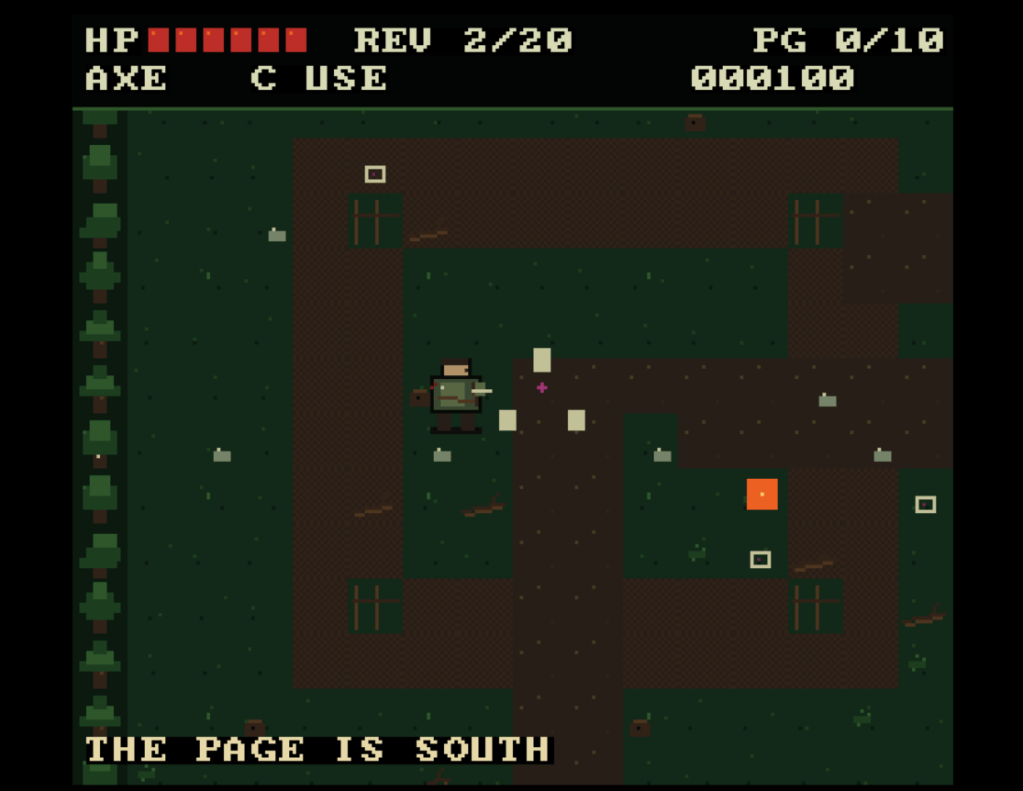
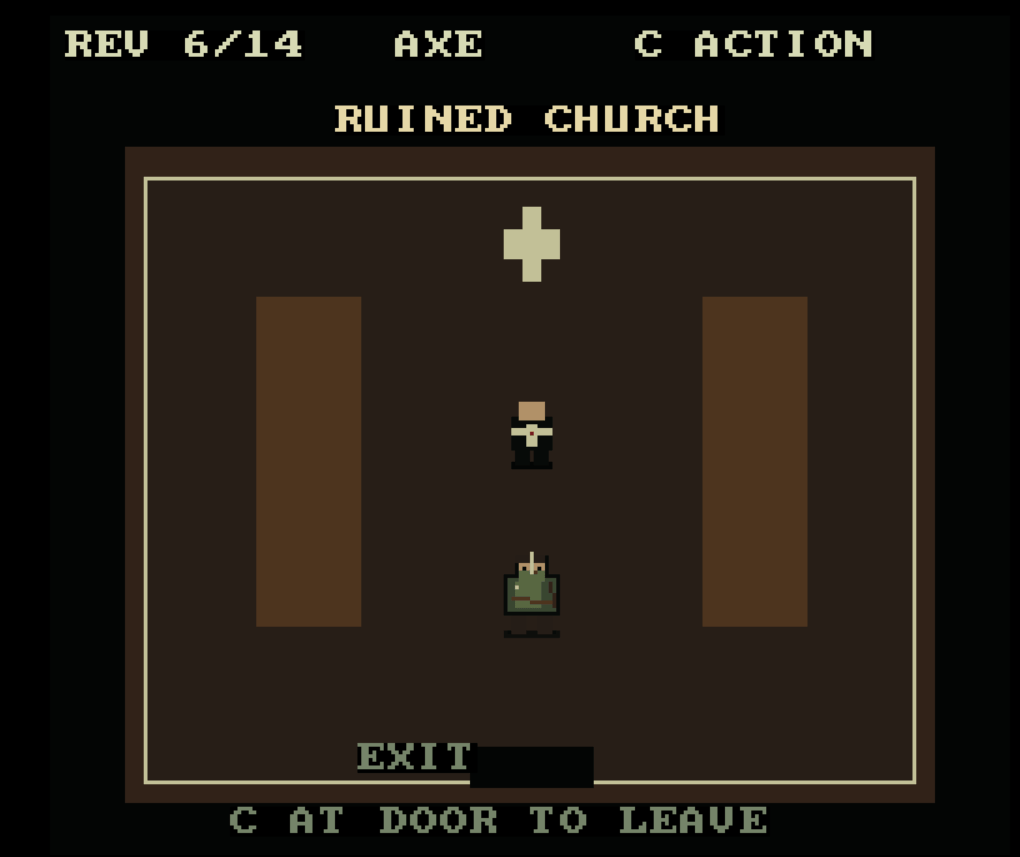
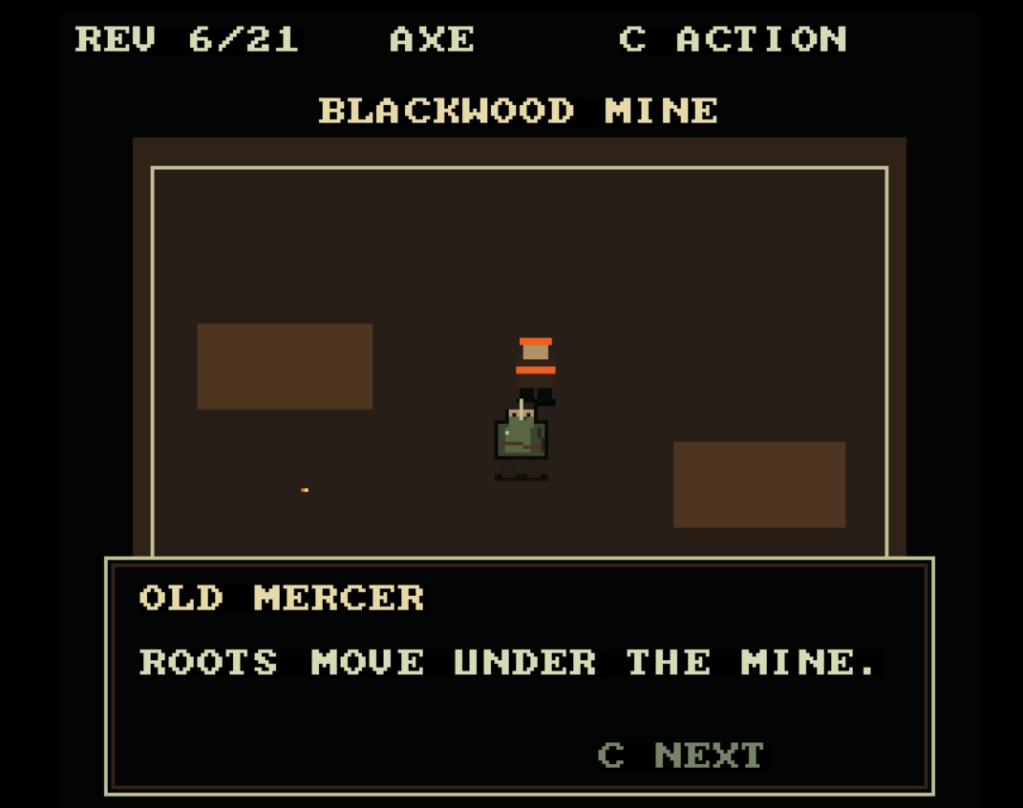
  • A small town in northern Alberta, cut off from the rest of the world. Lost somewhere among the thick brush and endless forests of an untamed wilderness, there is nothing left but the voices of the past.

    I’ve travelled in search of this hellish place a realm where nothing seems to live except the false memories of what once existed there. You may call it nothing more than a mark on a map. Blink and you’ll miss it. It’s the sort of place where someone might have to fight the forces of evil just to free the town and whatever poor souls are still alive within it.

    Something about places like that has always freaked me out.

    Imagine travelling down some forgotten dirt road, wandering around on an adventure without a care in the world, only to find yourself stranded or completely lost. Eventually, you stumble upon a town you were never supposed to find. We’ve all ended up in some little town we never planned on visiting, five hundred kilometres away from where we started. You know the kind of place.

    Sometimes it’s just another stop along the road.

    Other times, it feels like the beginning of a nightmare.

    Just imagine if spooky stuff like that actually happened in the real world. It’s crazy when you really start thinking about it.

    When I was a kid, I remember going camping with my parents, and naturally, that meant spending time around small towns and those old campgrounds scattered across the countryside. I honestly loved those places. Back in the 1990s, some of those campgrounds would have a couple of arcade machines sitting around for the kids to play while their parents were doing whatever parents did.

    I played so many classics that way.

    There’s something incredibly cool about knowing I actually got to experience that era firsthand. Future generations will never truly understand how awesome it was to walk up to a Mortal Kombat arcade machine, put your money into it, and start playing.

    Those were fun times.

    And now?

    Look around you.

    LOOK!

    Everything is turning to shit, and sometimes I think we need to take a stand, create a new standard, and forget about the crumb bums on Baker Street.

    In a strange way, that’s what this game represents to me.

    It originally started as nothing more than a demo, something I had always wanted to make but never really believed I would. As development continued, however, it started becoming something more. It became the kind of game I imagine I would have made if somebody had given me the chance to travel back in time with enough money and resources to develop something for the Atari 7800 or the Nintendo Entertainment System.

    If I had been there, this is the kind of game I would have wanted to put on those systems.

    So, in the meantime, I’m going to keep working away at it. I may expand the game considerably, experiment with new ideas, and see just how far I can take the whole thing.

    It’s completely different from almost anything I’ve made in the past, and I think that’s one of the reasons I find it so interesting. There’s something exciting about making a game that feels like it could have existed decades ago but somehow slipped through the cracks.

    Kind of like discovering some forgotten cartridge sitting in the back of an old video store.

    And hey, speaking of classics, Mega Man 6 is still the best one in the series.

    That’s just the truth.

    Until next time, be great, folks.

  • On September 10, I was sitting down to dinner with my family when we heard a knock at the door.

    That was strange.

    We weren’t expecting anyone.

    I went to answer it and found a food-delivery driver standing there with a McDonald’s bag. Nothing particularly unusual about that, except nobody in the house had ordered McDonald’s.

    Inside the bag was something even stranger.

    A small flash drive.

    No note. No explanation. Just a flash drive sitting inside a McDonald’s bag like the opening scene of an extremely low-budget horror movie.

    Being the responsible and highly intelligent adult that I am, I left it sitting on the table for a while and wondered what the hell was going on.

    I considered the possibilities.

    Maybe it belonged to somebody else.

    Maybe somebody was playing a joke.

    Maybe it contained some God-forsaken virus designed to encrypt my computer and demand $75,000 in Bitcoin from me because, as everyone knows, hackers are bad dudes with bad ’tudes.

    Naturally, after carefully considering all of those possibilities, I plugged it into my computer anyway.

    Because apparently I have learned absolutely nothing from horror movies.

    There was only one file on the drive.

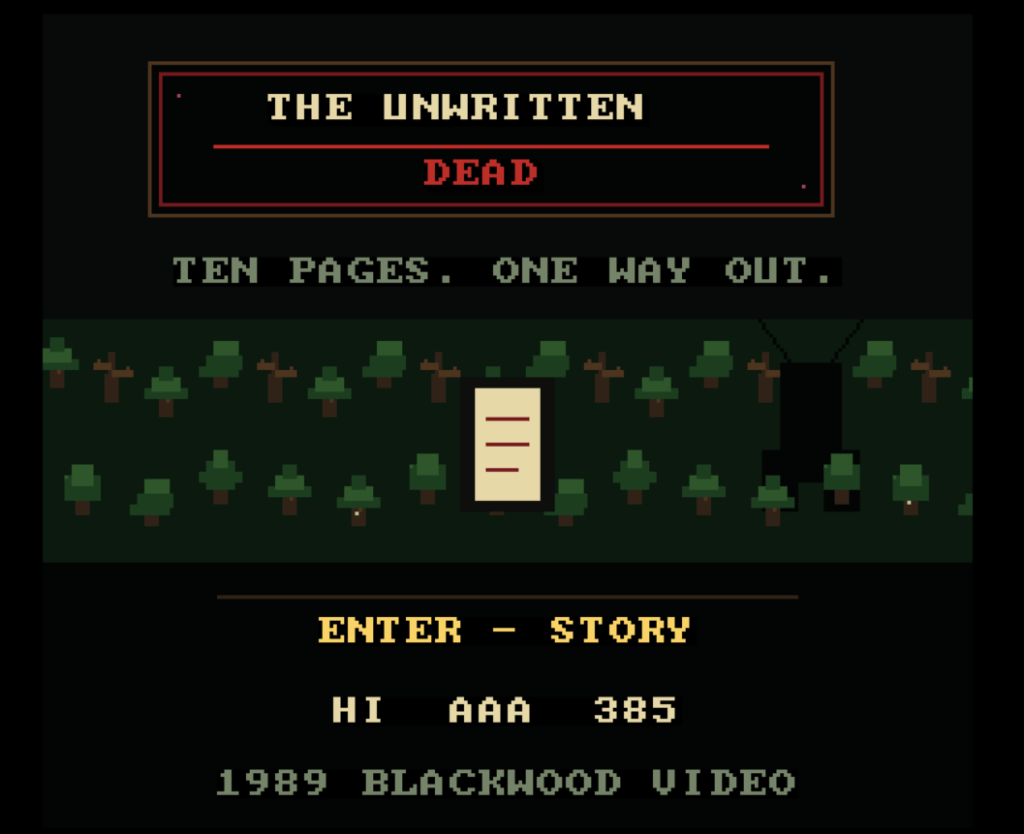
    “The Unwritten Dead.”

    That was it.

    Now I was curious.

    What exactly was on this thing? More importantly, how did whoever sent it know that I operated an incredibly prestigious underground blog with approximately one subscriber?

    Beats me.

    But by this point, the whole situation had taken hold of my imagination.

    After staring at the file for far longer than any reasonable person should, I clicked it.

    Inside were two things: what appeared to be the game’s source code in a plain text file and an executable file, for those unfamiliar with computer terminology.

    That was when things became a little unsettling.

    I suddenly had that uncomfortable feeling that somebody was watching me.

    Of course, that could also have been because I had recently visited the Dark Web after watching Drop Dead Gorgeous, but that is an entirely different story and probably best left for another day.

    The important part is the game.

    And the game is unlike anything I have played in a long time.

    The objective is relatively simple: explore the woods and collect scattered pages from an ancient text while fighting, or avoiding demons, monsters and other creatures that apparently consider you part of a balanced breakfast.

    There is something strangely hypnotic about it.

    I keep returning to it.

    Again and again.

    At this point, I have played the thing so much that I feel like I have somehow become part of it.

    And I am completely hooked.

    The graphics are especially interesting. They have that strange, slightly rough look of an old forgotten computer or console game, the kind of thing you might have discovered on a dusty cartridge at a garage sale in 1997.

    Which is particularly impressive considering that I absolutely, definitely, unquestionably had nothing whatsoever to do with making it.

    Obviously.

    All of this got me thinking about something I used to love: creepypastas about haunted video games.

    Back in the day, you could stumble across some story about a cursed cartridge, haunted computer game or mysterious ROM and lose an entire evening reading about it.

    Was any of it believable?

    Of course not.

    That was part of the fun.

    One of the most famous examples was BEN Drowned, the story about a supposedly haunted copy of The Legend of Zelda: Majora’s Mask.

    And really, think about the basic premise for a moment.

    Why would the ghost of some drowned kid named Ben decide that, of all the possible places in the universe to spend eternity, he wanted to live inside a Nintendo 64 cartridge?

    It makes absolutely no sense.

    And that is precisely why I love it.

    Then there was the NES Godzilla Creepypasta, another wonderfully ridiculous story about an apparently cursed game gradually becoming more disturbing.

    Those stories understood something surprisingly effective about horror: ordinary things become much more frightening when they stop behaving the way they are supposed to.

    A video game is harmless.

    A toy is harmless.

    A television is harmless.

    A computer is harmless.

    Until suddenly it isn’t.

    There is something wonderfully stupid and strangely unsettling about taking an object associated with childhood, comfort or entertainment and turning it into something threatening.

    Those old creepypastas were mindless fun.

    But by God, they were my kind of mindless fun.

    I tried listening to some of them again recently, and I will admit that a lot of them do not hit quite the same way anymore. Some have aged better than others.

    But I still love what they represented.

    They were weird.

    Creative.

    Unpolished.

    Sometimes completely ridiculous.

    And people made them simply because they thought the idea was cool.

    Maybe that is part of why this mysterious little game has gotten its hooks into me.

    It reminds me of that era.

    It feels like something that should not exist, some forgotten third-rate horror game somebody discovered buried on an old computer twenty years after the developer disappeared.

    And apparently that is exactly my kind of thing.

    I also realize that I have been relatively quiet around here lately.

    Do not worry.

    I have not abandoned the site.

    I have simply been doing what I always do: working on far too many projects at the same time.

    I am absolutely terrible for this.

    I will start building a game or program and immediately convince myself:

    Yes. This is the one.

    This is the project I am going to focus on.

    This is the project I am going to finish.

    I start making lists of improvements. I begin planning features. I imagine the completed game.

    And then – blammo – another idea crashes into my brain and suddenly I want to build something completely different.

    Does anybody else get like that?

    Because apparently my greatest enemy as a developer is my own imagination.

    Still, something has changed recently.

    Over the past few weeks, I have been replaying some of my favourite games, the games that originally inspired me to start creating my own projects, build this website and spend an unreasonable portion of my life staring at source code.

    It reminded me why I started doing this in the first place.

    Because it is fun.

    Not because I expect to become some world-famous developer.

    Not because every project needs to become a masterpiece.

    Not because somebody on the internet needs to declare me a genius.

    I just genuinely love making things.

    Maybe someday one of my games will bring a little joy to somebody somewhere in the world.

    Jesus Christ, that sounds fucking lame.

    But you know what?

    It is true.

    The world can be a miserable place sometimes. There is always something going wrong, somebody arguing about something, or another reason to convince yourself that everything is falling apart.

    So if sitting at my computer and creating weird games about haunted forests, demons, mysterious flash drives and questionable life decisions gives me something to look forward to, then I think that counts for something.

    Maybe that is enough.

    And as for the mysterious game?

    I am still playing it.

    Probably more than I should.

    But if the screen suddenly starts displaying my name or some dead kid named Ben begins sending me messages, I promise I will write another article.

    Assuming, of course, the haunted flash drive does not get me first.

  • Today is the day the kids go back to school.

    Not going to lie, it reminds me a lot of being their age and heading back after two glorious months of fun in the sun. There was always something strange about that first week back. Summer felt endless right up until the moment it wasn’t, and suddenly you were sitting behind a desk wondering how the hell September had arrived so quickly.

    There has been a lot going on in my little corner of the world lately, and for the most part, I’m enjoying every minute of it. The kids had a great first week back, which, naturally, has somehow given me even more ideas for games.

    Because apparently my brain is incapable of simply enjoying anything without eventually asking, “Could this be a game?”

    I’ve been going back and forth on game design lately. I get excited about one idea, start thinking about another, and before long I’m mentally building three entirely different projects at once. Then, eventually, it hits me like a ton of bricks that maybe I’m looking at everything the wrong way.

    Maybe sometimes you have to stop creating long enough to actually enjoy the world around you.

    And, perhaps more importantly, I should probably finish the hiking game I’ve already spent an absurd amount of time working on.

    There is something intoxicating about always creating. Always pushing forward. Always chasing the next idea. It feels productive, but it can also become a trap. Eventually, you find yourself surrounded by unfinished projects, abandoned concepts, half-built worlds, and folders full of things you swear you’ll return to someday.

    That kind of creative clutter starts weighing on the mind.

    I know I’m hardly alone in this. I’ve seen countless programmers, artists, writers, and other dreamers talk about the exact same problem. You become obsessed with making one thing until another idea appears and whispers, “Hey, wouldn’t this be even better?”

    Before you know it, you’re gone.

    I think that mentality has taken its toll on me a little.

    So this week, instead of jumping into another completely different project, I’ve been working on expanding the world of A Hike, which is still very much a working title.

    I’ve spent a lot of time mapping new locations, trails, forgotten places, and strange corners of the wilderness.

    The reason is pretty simple: I’ve always wanted to travel the Appalachian Trail.

    There is something almost mythical about the idea of walking through that enormous stretch of wilderness. You are travelling through a world that technically exists inside our own, but once you’re deep enough in the woods, it probably doesn’t feel that way anymore.

    And that makes my imagination run wild.

    What would you find if you wandered far enough from the main trail?

    Maybe an abandoned ghost town slowly disappearing beneath the trees.

    Maybe an old coal mine sealed decades ago.

    Maybe the remains of some forgotten settlement where nobody remembers the names of the people who once lived there.

    Or maybe you find somewhere worse. A place where the ugliness of the past never really disappeared and has been quietly festering in the wilderness, waiting for someone stupid enough to wander in.

    That kind of stuff gets me.

    I love the idea of a game where exploration itself becomes unsettling. You aren’t walking toward a giant glowing objective marker. You’re simply following a trail, noticing something strange in the distance, and wondering whether curiosity is worth the risk.

    That uncertainty is where horror becomes interesting.

    And while we’re talking about things I love, can we please bring back old-school computer terminals?

    I adore the look of old mainframes and terminal games. Green text. Blinking cursors. Maps made from symbols. Machines that looked like they were doing something important even when they were probably just calculating somebody’s payroll.

    There is something wonderfully honest about that style.

    Your imagination has to do some of the work.

    And I think we desperately need more of that.

    We live in a time where everything is becoming increasingly polished, automated, generated, recommended, optimized, and shoved directly into our faces. AI-generated slop has started flooding practically every creative space imaginable, and I think there’s a real danger in allowing convenience to replace imagination.

    I’m not some fearmonger screaming that technology is going to destroy civilization.

    The lid has already been smashed and the cookie jar is wide open.

    We’re not putting the cookies back.

    But we should probably start worrying about the mice and flies crawling around inside before somebody decides we’re supposed to eat whatever is left.

    That’s the problem.

    Technology can be an incredible tool, but creativity still needs a human being behind the wheel. It needs personality. Bad decisions. Weird ideas. Obsessions. Mistakes.

    It needs somebody staring at an imaginary Appalachian Trail map at midnight thinking, “You know what this game needs? An abandoned mining town.”

    Anyway, where the hell was I?

    Right.

    My kids went back to school.

    Time moves unbelievably fast.

    One minute you’re remembering your own first day back after summer vacation, and the next you’re watching your children head through the school doors while realizing those old memories happened decades ago.

    Which reminds me of something completely unrelated.

    I once read that while The Master of Disguise was being filmed, the September 11 attacks happened around the time they were shooting the infamous Turtle Club sequence. Production reportedly stopped, the cast and crew observed a moment of silence, and filming later continued.

    It is one of those bizarre pieces of movie trivia where a ridiculous pop-culture moment exists beside something historically devastating.

    Human history is strange like that.

    Also, The Master of Disguise was fucking terrible.

    Anyway, I’ve got some game testing to do and an eye doctor appointment to get to.

    Until next time, be good people.

    Take care.

  • A reflection on fatherhood, getting older, fresh bread, video games, and the terrifying things that might be waiting beyond the tree line.

    There comes a moment in a person’s life that feels almost legendary when it finally arrives.

    My children are going back to school on Tuesday.

    It really makes you think when you realize your kids are getting older right in front of your eyes. You spend so much time living from one day to the next that sometimes you don’t notice it happening. Then suddenly another school year arrives, they’re a little taller, a little older, a little more independent, and you’re left wondering where the hell all that time went.

    Part of me worries about the future.

    I wonder whether they’ll eventually hate me. Maybe they’ll grow up and decide they don’t want anything to do with me anymore. I suppose parents have worried about that forever. Our own parents probably looked at us when we were young and wondered the exact same thing.

    It’s completely out of my hands, and maybe that’s what scares me the most.

    My children are growing up. Someday they’ll have their own lives, their own families, their own problems, and I’ll be an old man sitting around the house with my wife wondering how everything happened so quickly.

    Life really does pass you by.

    Take yesterday, for instance.

    I bought a bread maker.

    Why?

    Because I’ve always wanted to make my own bread.

    White bread, rye bread, sourdough, the whole nine yards. There’s something incredibly satisfying about the idea of making fresh bread at home. I especially like the thought of having it around Thanksgiving. Who the hell doesn’t love the smell of freshly baked bread filling the house?

    Maybe that’s another sign that I’m getting older.

    There was probably a time when buying some new piece of technology would have had me excited. Now I’m sitting here thinking, “Holy shit, I can make rye bread whenever I want.”

    And I’m genuinely excited about it.

    I’ve also been working on a few projects lately.

    What kind of projects?

    Video games.

    One is a space game I’ve been putting together. The other is considerably stranger.

    You play as a hiker trying to travel north during a zombie apocalypse.

    Why?

    Because I love hiking, and I’ve always been fascinated by the idea of someone disappearing into the wilderness while the world completely changes behind them.

    It reminds me of that story about the guy who supposedly went into the woods for an extended trip and returned to discover the world had entered the COVID lockdown era. Imagine walking into the wilderness when everything seems relatively normal, then emerging days later into something completely different.

    For the record, I thought a lot of what happened during that era was completely fucking stupid.

    But that’s neither here nor there.

    Where are all the bleeding hearts now, anyway?

    Funny how quickly things change.

    But I digress.

    The idea behind the game is simple.

    You head into the wilderness and discover that the dead have risen.

    Now imagine being miles from civilization when it happens.

    No television.

    No internet.

    No news.

    No idea what is happening.

    You walk out of the forest expecting to find a gas station, a restaurant, or some tiny mountain town.

    Instead, you find abandoned cars.

    Broken windows.

    Blood on the pavement.

    Nobody answering when you call out.

    Then something moves.

    There is something genuinely terrifying about the idea of the dead walking among us.

    That and somehow finding yourself trapped inside the world of Silent Hill are probably two scenarios that would scare the absolute hell out of me.

    It’s the unknown that does it.

    The great unknown.

    The great beyond.

    The great outdoors.

    Everything packaged together with one simple objective:

    Live long enough to see tomorrow.

    There is already something unsettling about the wilderness even without zombies.

    We like to pretend nature is peaceful.

    Sometimes it is.

    But go hiking alone and listen carefully.

    A branch breaks somewhere behind you.

    You stop walking.

    Nothing.

    You keep moving.

    Then another branch breaks.

    Maybe it’s a deer.

    Maybe it’s a bear.

    Maybe it’s another person.

    Maybe it’s something you can’t see.

    Every strange animal call, every movement in the brush, every shadow between the trees reminds you of something modern human beings don’t particularly enjoy admitting.

    We are not always in control.

    In fact, we’re probably in control of far less than we think.

    Step onto a lonely trail and suddenly the rules change.

    Walk deep enough into the wilderness and you’re no longer sitting comfortably at the top of the food chain with heating, electricity, grocery stores, hospitals, police, and everything else civilization provides.

    You’re just another animal walking through the woods.

    One wrong step and blammo.

    Now we’re dealing with monsters, ghouls, zombies, strange creatures, undocumented mysteries, and whatever else might be hiding out there.

    Because let’s face it, there’s some scary shit in the woods.

    Especially when you’re hiking.

    Something could watch you for miles and you might never know it.

    Something could follow you.

    Something could hear you long before you hear it.

    That’s the feeling I want this game to capture.

    The moment you step onto that hiking trail or approach that peaceful-looking lake, you’re no longer the master of anything.

    You’re a sheep that escaped the pen.

    And somewhere beyond the firelight, something might be watching.

    I’m still trying to figure out exactly how the game should work.

    The setup.

    The display.

    The entire engine, really.

    I want it to look simple, almost like something you might have found on a computer in the 1980s, while underneath that simple appearance is a complicated survival simulation.

    Food.

    Water.

    Weather.

    Injuries.

    Equipment.

    Exhaustion.

    Cold.

    Other survivors.

    And, obviously, zombies.

    With October getting closer, I’m left wondering what other horrors I can come up with.

    That’s what I want to make.

    Games people actually want to play.

    More importantly, I want to make the kind of games I would have wanted to see sitting on a store shelf when I was a kid.

    Games that look simple but hide something enormous underneath.

    Games where imagination fills in everything the graphics can’t show you.

    Maybe that’s why I keep doing all of this.

    I write blog posts.

    I make games.

    I spend time with my kids and my wife.

    I go to a job I truly hate because I have to do it to survive.

    Then I come home and create worlds where astronauts explore distant planets, hikers run from zombies, monsters hide in forests, and anything can happen beyond the next screen.

    That’s my life.

    The kids keep getting older.

    I’m getting older.

    Thanksgiving will eventually come around.

    Hopefully I’ll figure out how to make some damn good bread before then.

    And somewhere between work, family, bread machines, video games, and worrying about what might be hiding in the woods, life keeps moving forward.

    It moves frighteningly fast.

    But you know what?

    I wouldn’t trade it for the world.

  • So, I’ve been doing a lot of thinking lately. This usually happens when I’m bored out of my mind at work.

    Then I hear that Lake Ontario’s name has been changed? Have you seen this? Have you heard about this? Apparently it’s the Lake of America now.

    For some reason, that got me thinking about outer space.

    You know, we know more about the stars than we do about why cats stick their heads through slices of bread. Remember that? Now that was some good stuff.

    Anyway, I was drifting in and out of thought while working away in the acid mines, and I started thinking about the strange balance between having a soul-crushing job and coming home to something that actually builds the soul back up.

    That brought me back to the kinds of games I used to play, back when imagination was still part of the hardware.

    Ever play Adventure on the Atari 2600? Or Haunted House? Those games did an incredible amount with almost nothing. They pushed that little machine as far as it could go and expected the player to fill in the rest with imagination.

    Then you had games like Zork, which helped open the door to an entirely different kind of adventure. No massive graphics card. No cinematic cutscenes. Just words, ideas, and your own brain doing half the work.

    And then there were the graphical adventures.

    While other people were playing the PlayStation 3, I was digging through weird old computer games like Twilight Zone, that old Sherlock Holmes game, and one set aboard the Titanic. There was just something about them. Something strange, forgotten, and completely absorbing.

    I don’t know. Maybe I’ve always been an old soul.

    Sometimes I think I was reincarnated from some dead nerd who spent his entire life collecting obscure computer games and arguing about floppy disks.

    But that’s neither here nor there.

    What matters is that I’ve recently been told about an old starship drifting somewhere in the darkness of space.

    A ship where trade routes stretch across distant systems, where commands glow across a dual-color computer display, and where the captain can choose between three glorious shades of the future:

    Green. Amber. White.

    An ancient machine.

    A wandering vessel.

    A relic from a future that somehow feels older than the present.

    Clearly, something must be done about this menace to civilization.

    And I intend to investigate.

  • So lately, I’ve come to the realization that there are still parts of this world undiscovered by us mere mortals.

    I’ve always loved the idea of playing a game where you explore a forgotten world buried deep within the jungles of some faraway country. Now, I know people are going to be screaming like harpies, saying, “But hey, guy over there, we have technology that’s mapped out every corner of the world, so what’s the point of exploring?”

    Well, I have to say to you, for that matter of fact, that you have some nerve, because that’s only the surface of the planet. What about deep underground?

    I’ve been playing a lot of great games lately and watching videos of this guy who plays Final Fantasy games under strict guidelines, and honestly, it brought me back to when I was a child playing great adventure games as a tender young fella growing up in the early ’90s.

    I was always in love with the notion of exploration. Of course, if you’re going exploring, there always has to be a hidden temple somewhere. I think it’s buried somewhere deep inside all of our brains. That idea of being cut off from the world, surrounded by the dead and forgotten, knowing you’ll succeed if you just keep pushing onward into that darkened death pit up ahead.

    Although, I’ve always wondered just how much gold one adventurer can carry before it stops them dead in their tracks.

    Also, do these people actually sleep inside the old forgotten temples they’re exploring in faraway jungles?

    I’d be terrified of spiders.

    And zombies.

    And ghosts.

    You know, that reminds me of a time when I was absolutely addicted to Pac-Man.

    It was late ’91, around this same time in August, when the warmth of the setting sun would slowly give way to those cool nights where you could hear the crickets performing in the moonlight. There was this strange sense of peace that would wash over your soul because, for that brief moment, everything felt right.

    No matter how shitty the world gets, or how much worse it will probably become, I like thinking back to memories like that.

    I had this cousin who, to give him credit, was about eight years older than me, and he had all these great games. He even had those little tabletop handheld arcade cabinets. You know the ones? Like Frogger?

    They were so damn cool.

    And he hardly ever played them.

    Long story short, he became a drunk, got kicked out of the family, and here I am living the glamorous life of a Blogger and Game Developer of One.

    I work a dead-end job. I enjoy programming. I love spending time with my children, my wife, and my cat.

    Although the cat occasionally seems to believe she’s in charge of the entire operation.

    Still, it’s nice being able to enjoy myself and explore different forms of media and programming. You know what I mean?

    Anyway, like I was saying, Pac-Man for the Atari 2600 was obviously the greatest version ever made.

    Of course, you can’t say something like that without somebody jumping out from behind a dumpster shouting that Pac-Man 2 for the Sega Genesis was actually the greatest game in the series.

    That’s sarcasm, by the way.

    Because in all honesty, that game annoyed the ever-loving hell out of me.

    You’re controlling Pac-Man like he’s some hunted beast escaping crazed paranormal lunatics who seek to feast upon the flesh of this poor, defenseless space man of sorts, a creature hopelessly addicted to eating food pellets and consuming crack rocks just to survive the mean streets of nineteen-eighties Detroit.

    But strangely enough, thinking about all of this got me thinking about those small things that keep me grounded. The memories, the games, the sounds of summer nights, and the little things that keep the evil and dastardly Space Invaders away.

    With my ongoing quest to find a new job, it would certainly be nice if something came along. Until then, I’ll keep quoting my favorite zombie movie, Day of the Dead, humming along to some awesome rocking beats, and usually thinking about this project I’ve been spending a few evenings working on.

    I’ve had this idea for a platform adventure game where you play a character seeking adventure, treasure, and glory.

    Because at the end of the day, isn’t that what we all want?

    Adventure.

    Treasure.

    Glory.

    Or at least enough treasure that we don’t have to work a dead-end job anymore.

    For the time being, I’m slapping together something I’ve wanted to make for years.

    And honestly, that’s the truth.

    Back when I first met my wife, I remember sitting in my car after a night of heavy gaming and caffeine binging, thinking about how much I wanted to make something like this. The idea never completely disappeared. It just sat there somewhere in the back of my brain waiting for me to finally do something about it.

    So that’s what I’m doing.

    If everything goes well, I’ll be posting some pictures in my next article.

    Until next time, be good people, like and share this blog post, and let’s make something great.